




Years ago, I was working on a television show with Karan Johar. Between shots, he told us that a couple of days earlier he had found himself in Vashi for a shoot. The thought of Johar, a legit passport holder of the Republic of Bandra, making his way to Vashi, which is technically not even Mumbai, was amusing enough. But then, he mentioned that his mother got wind of it and tried to coax him to check out the vegetables in Vashi. “They are fresher and cheaper”. Vashi, incidentally, is a central hub for all fresh produce coming in from all parts of Maharashtra, and is known for wholesale vegetable prices.
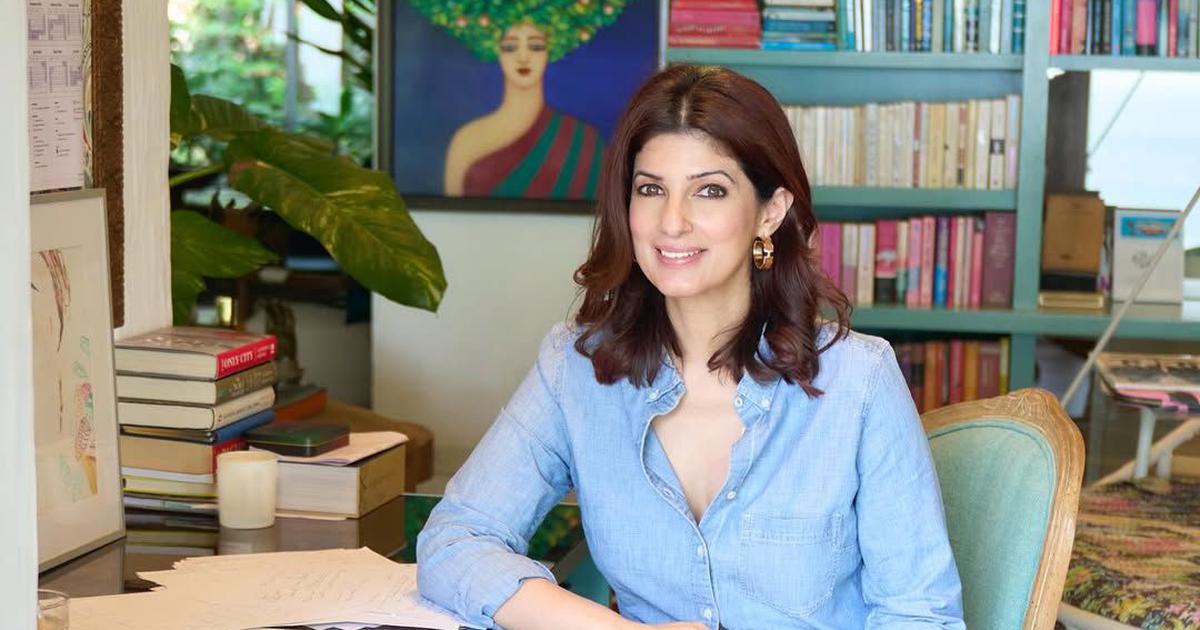
Johar didn’t, of course, scout for vegetables, but the anecdote stayed with me for a bit. Even as a seasoned chronicler of celebrity culture, I still do have my “celebrities are just like us” moments – they even have discount-seeking mothers. That the privilege of their lives doesn’t insulate them from its ordinariness always gets me interested. And that, for me, has also been a defining trait of Twinkle Khanna’s writing.
A familiar vibe
In 2015, Twinkle Khanna made her non-fiction debut with Mrs Funnybones – based on her popular column by the same name in The Times of India. The book, a compilation of sharply observed and exaggerated for comic effect vignettes from Khanna’s life, was an instant bestseller. I felt that a lot of the charm in Khanna’s early writing stemmed from how she invested a cocooned, privileged existence with upper-middle-class relatability.
That she came from Bollywood royalty was not central to the plot – there was no inside scoop on Bollywood here. Instead, there was an ensemble of characters which were identifiable in all our lives – the exasperating husband, the tough to please MIL, the precocious teenage son, the embarrassing mother and a retinue of staff that existed primarily to drive Khanna up the wall. This, combined with a sly and often astute commentary on topical issues, made Khanna a refreshing, humorous voice. In 2015.
A decade later, Mrs Funny Bones Returns – in the interim, a global pandemic spun the world off its axis, Donald Trump was elected and then returned for a second term, more people talk to ChatGPT than to one another, and the future of the world is in the hands of Gen Z, a generation confused about whether it wants to identify as he, she, they or just a cat. The generation that follows – Gen Alpha – communicates in 6-7 memes and even they don’t know what those mean. It has been a devastating decade – with enough action packed in for a century.
So, where does that leave the sequel to Mrs Funnybones in 2025? Tonally and structurally, the new book is a lot like its predecessor. There are 26 chapters with quirky titles like “What Animals Can Teach Us About Luv, Shuv And Shaadi”, “From Foie Gras to Bheja Fry”, “How to Survive Marriage Without Going to Jail”. You get the drift.
A comfort read
The chapters are interspersed with blurbs from Khanna like “Humour is like deodorant. You can live without it. But if you use it, you make life easier for everyone around you, including yourself”. Some of these are on point, some read like the self-aware dad jokes that Khanna routinely cracks. The ensemble cast in Khanna’s life is back – the children are older, the man of the house still thinks his mum’s rajma is the best, and her mother continues to embarrass her. The book and the household fall into a familiar rhythm – it is almost like, apart from biological factors like ageing, nothing changed too much in the decade gone by. Except this time round, Khanna’s writing works better when she is reflective as opposed to comedic.
The best evidence of this is the chapter titled “Father’s Day, for Me, Will Always Be In December”.
It comes towards the end – and is a loving and honest reminiscence of her relationship with her father, the late superstar Rajesh Khanna. She shares his birthday and “his rosy cheeks, his crinkling eyes, his weak ankles and his fiery temper” – the only man who had the power to break her heart. The chapter feels intensely personal and moving – exempt from the pressure of wisecracks and witty one-liners.
Mrs Funnybones Returns is an easy read. Khanna writes about several things in her trademark combination of exaggeration and self-deprecation – the importance of female friendships, the inevitable empty nest of parenting, and even her obsession with MSG, aka the notorious Gurmeet Ram Rahim Singh! However, you do wish she could have written slightly more about her decision to do a Master’s degree in Fiction Writing from Goldsmiths University in the UK. A woman in her late forties, going back to university in a different country with classmates half her age, is fodder for many stories. Unfortunately, Khanna keeps it to just a chapter. There is enough source material there for a book!
If you are a fan of the familiar, Mrs Funnybones Returns is a comfort read. It is consistent in its tone and doesn’t seek to be a breakthrough. It is on brand if you have continued to follow Khanna’s column and writing in the last ten years.
Naomi Datta works on reality shows like The Fabulous Lives of Bollywood Wives and is the author of How To Be A Likeable Bigot and The 6 PM Slot.
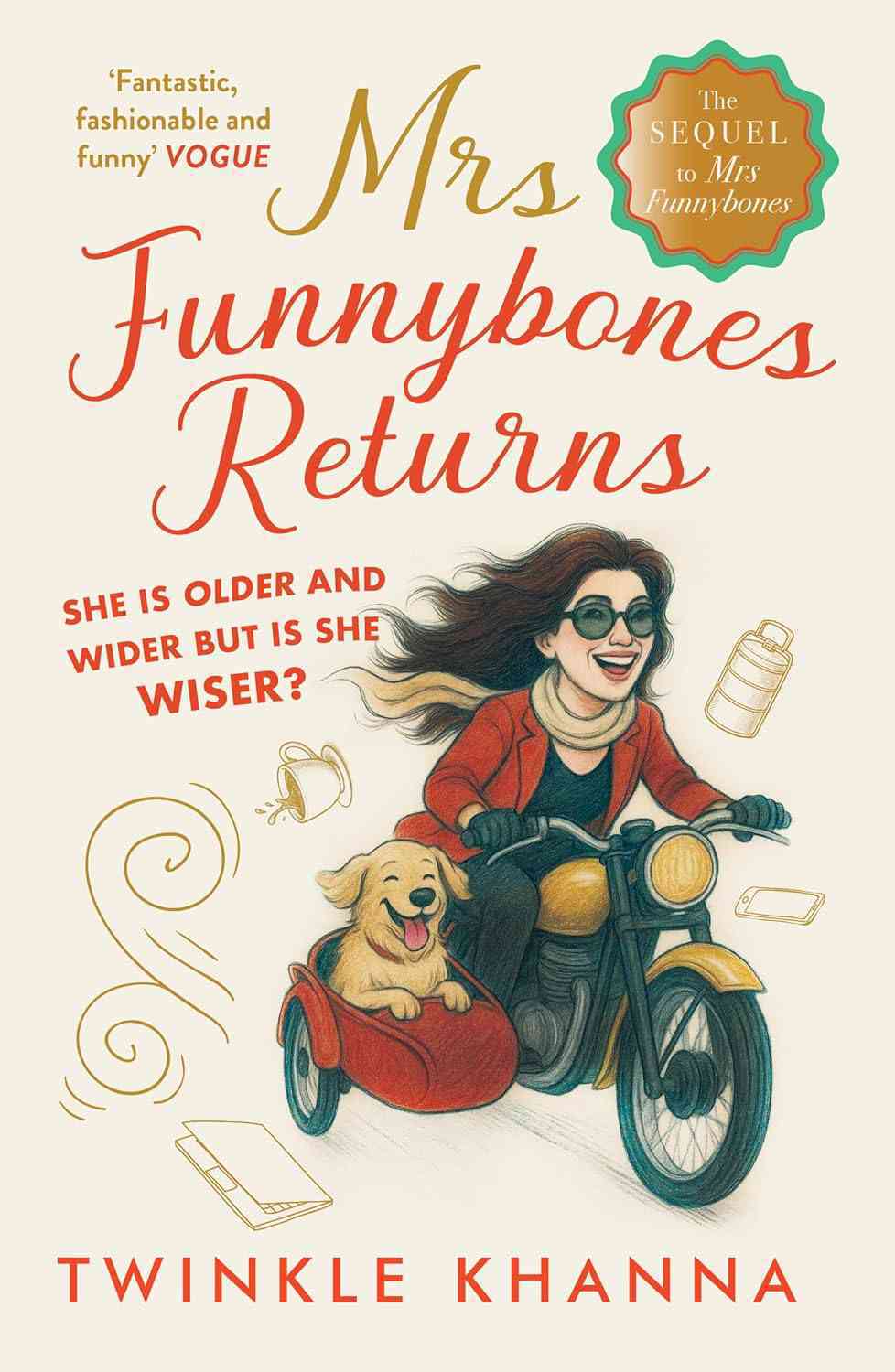
Mrs Funnybones Returns, Twinkle Khanna, illustrated by Upasana Nidhi, Juggernaut.
